Leading Consolidation Research, Strategy, and Redesign of 16 Scheduling Flows Across the Enterprise
Overview
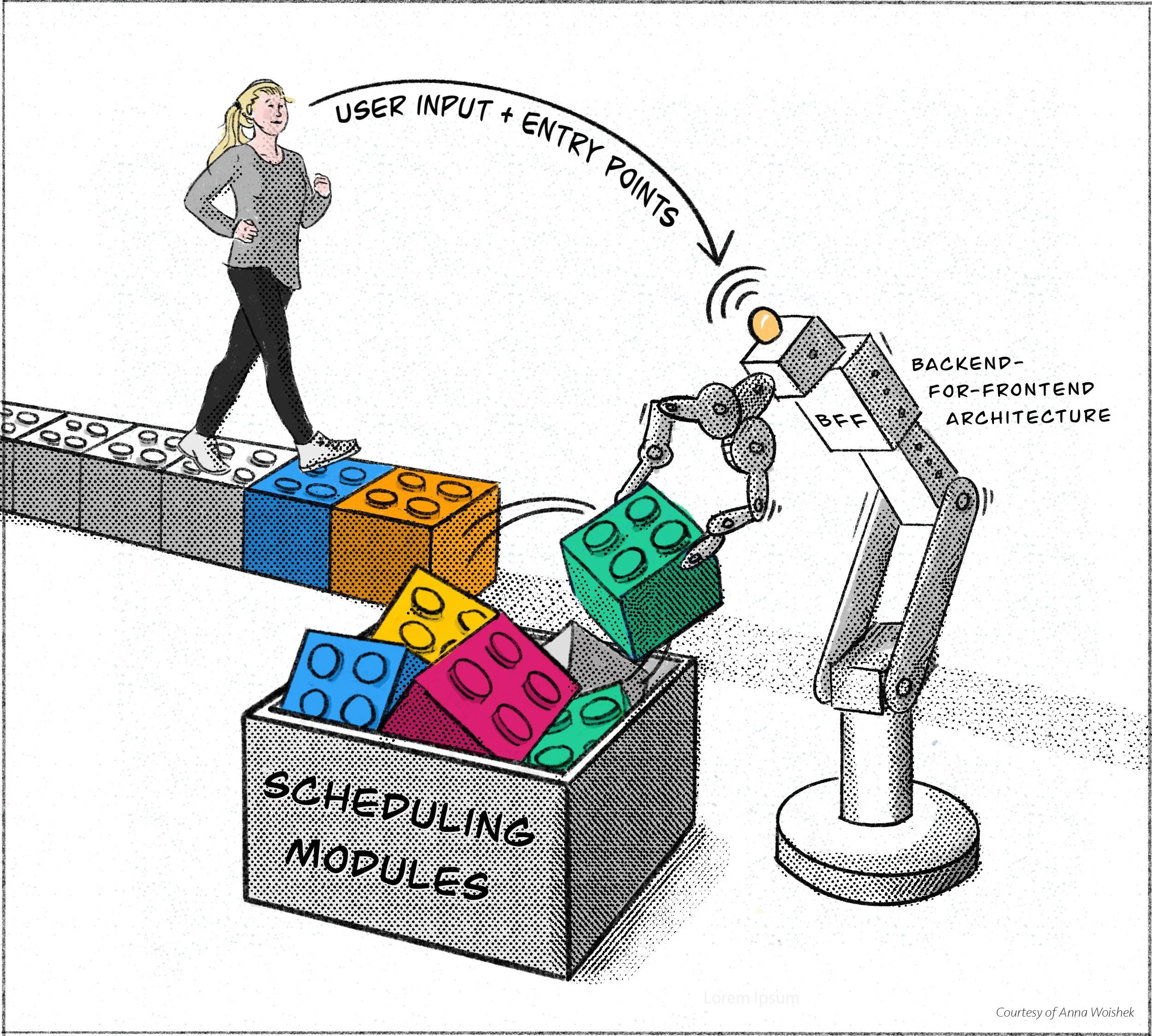
Like many large companies, digital growth at CVS was sometimes messy and not as coordinated as it could be. Over time, various teams had built out 16 somewhat disparate scheduling flows across the enterprise. As a thought leader in scheduling, I was tasked with developing a strategy to bring consistency and efficiency to our organization through a modular framework, leveraging our research and best practices.
Planning, Communication, Strategy, and Operationalization
Conducting story mapping
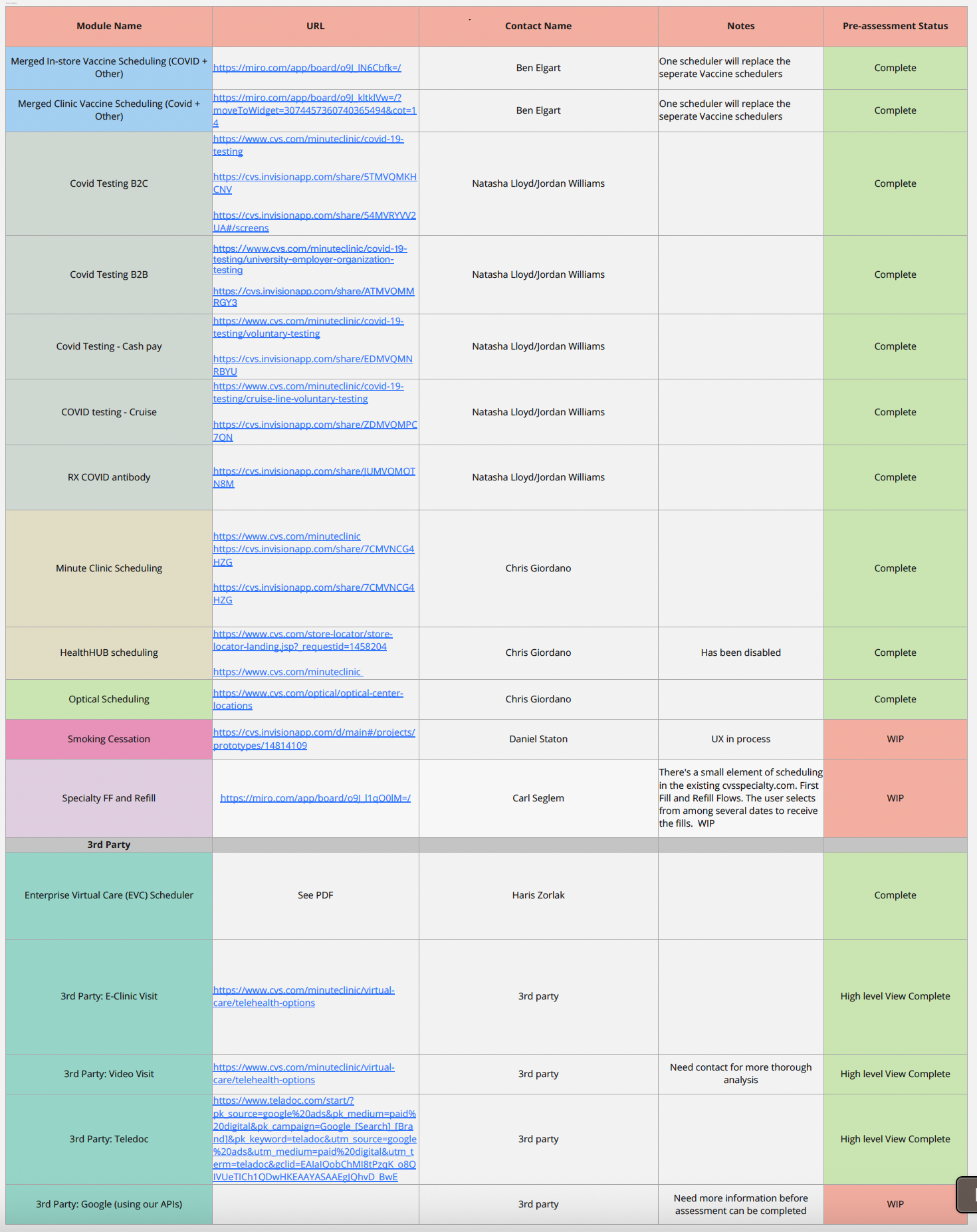
Inventorying all known scheduling flows and establish points of contact (POCs)
Defining a staffing strategy necessary for my design team to lead and for other teams to support and collaborate
Establishing working agreements and role-clarity to streamline collaboration among other design teams and POCs
Conducting heuristic and branding evaluations
Conducting new best practices and competitive analysis research
Having POCs walk-through flows and documentation, provide necessary context, and deliver relevant metrics and research
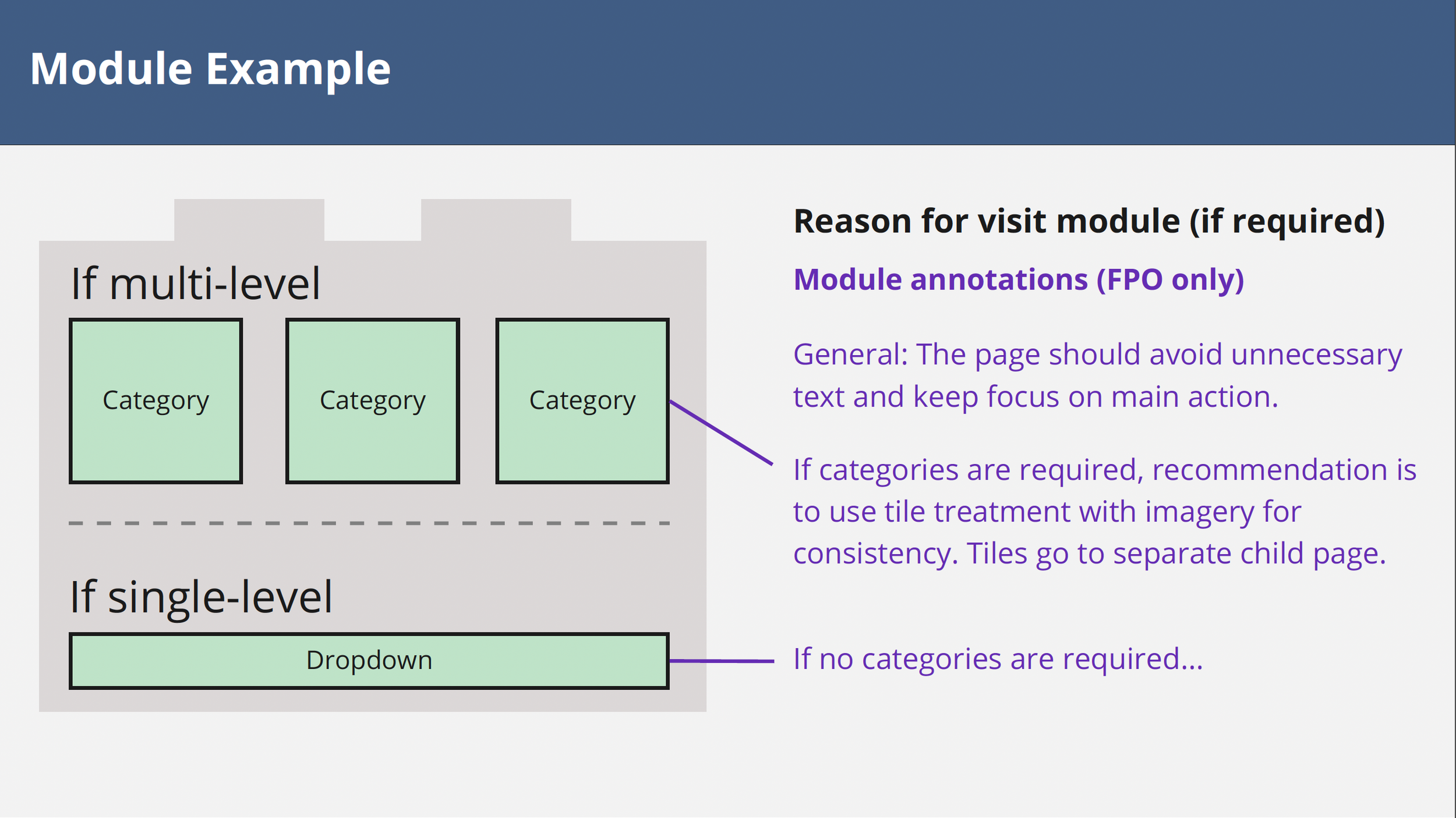
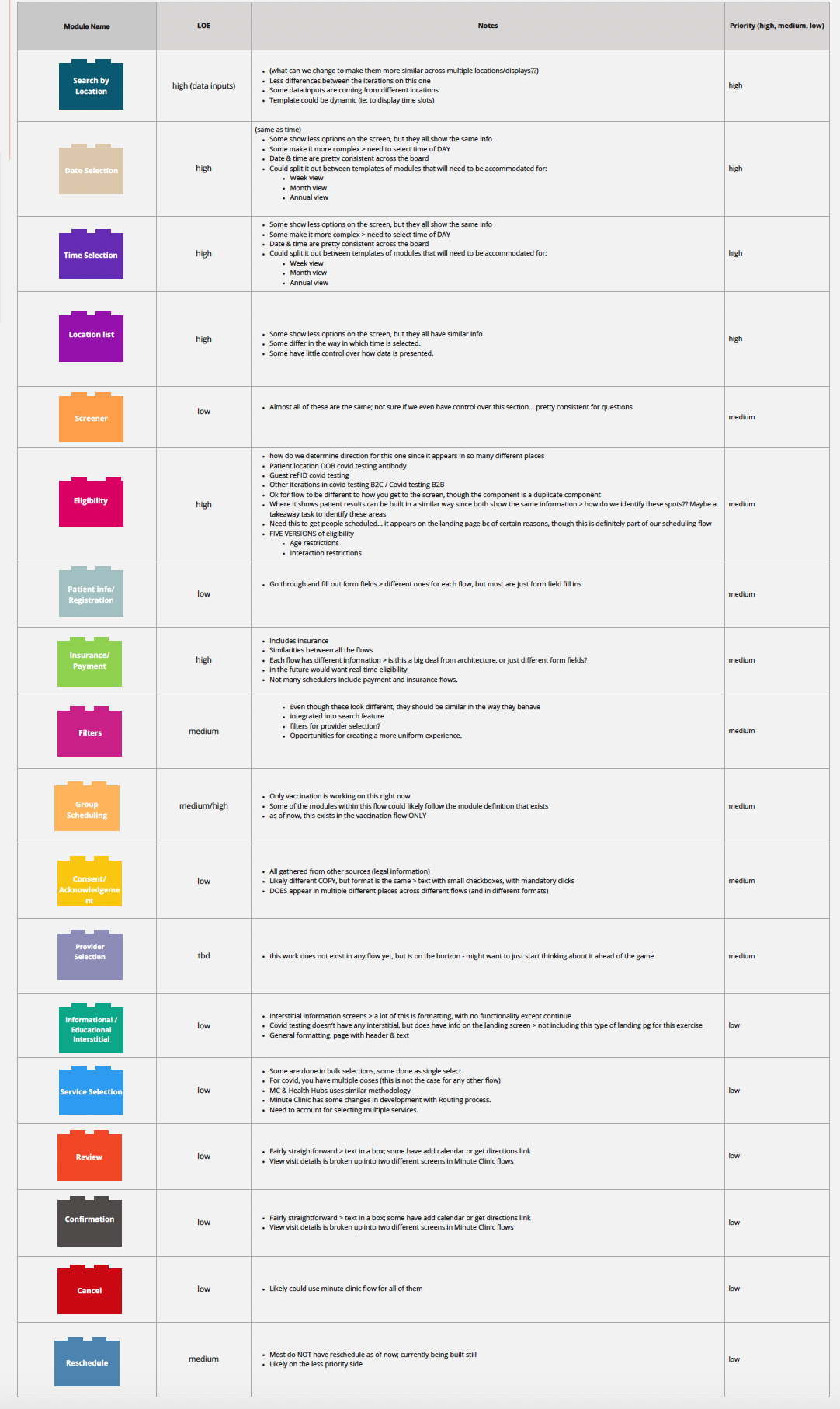
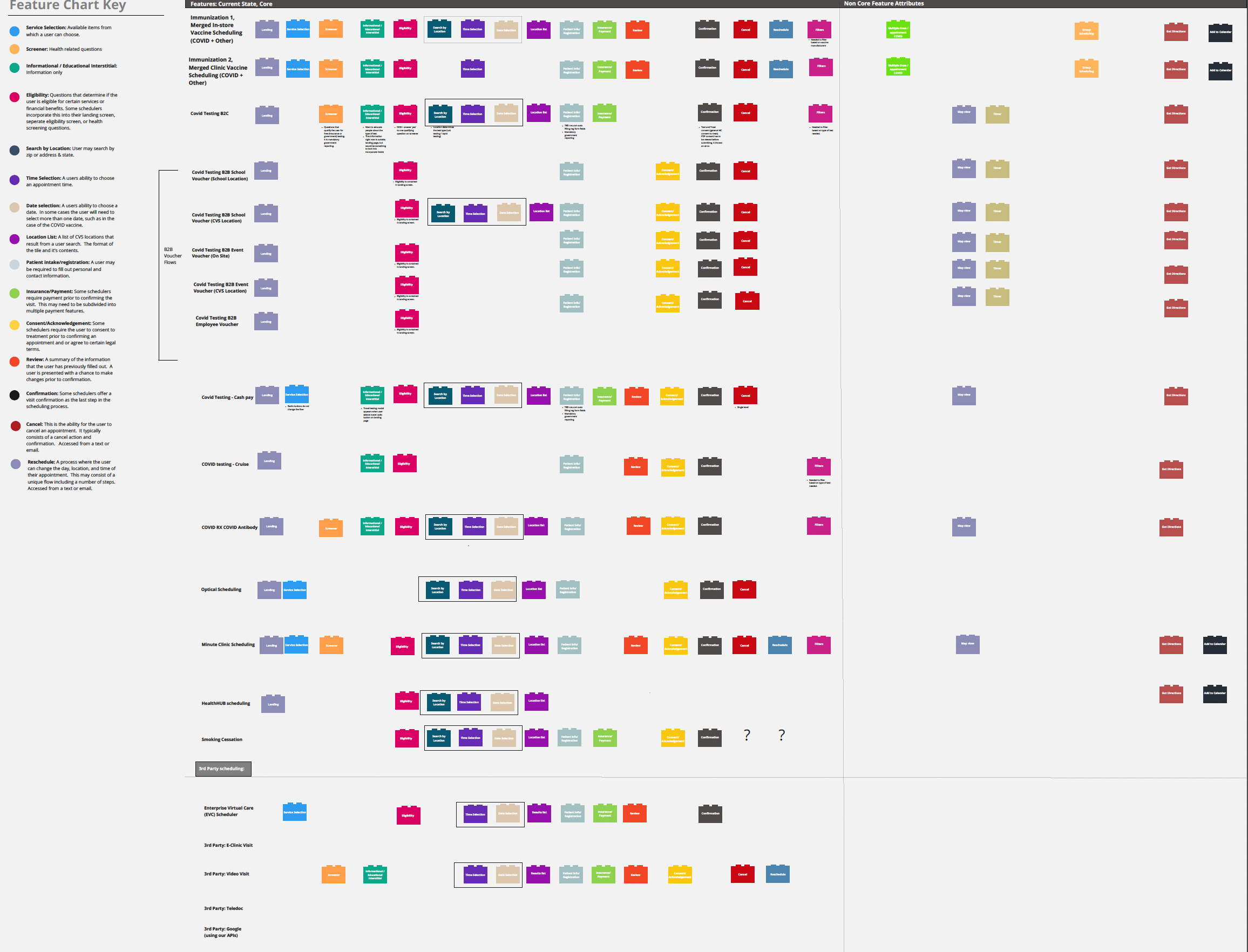
Defining individual modules and establishing a common segmentation strategy
Producing a cumulative view of all flows broken into newly identified modules
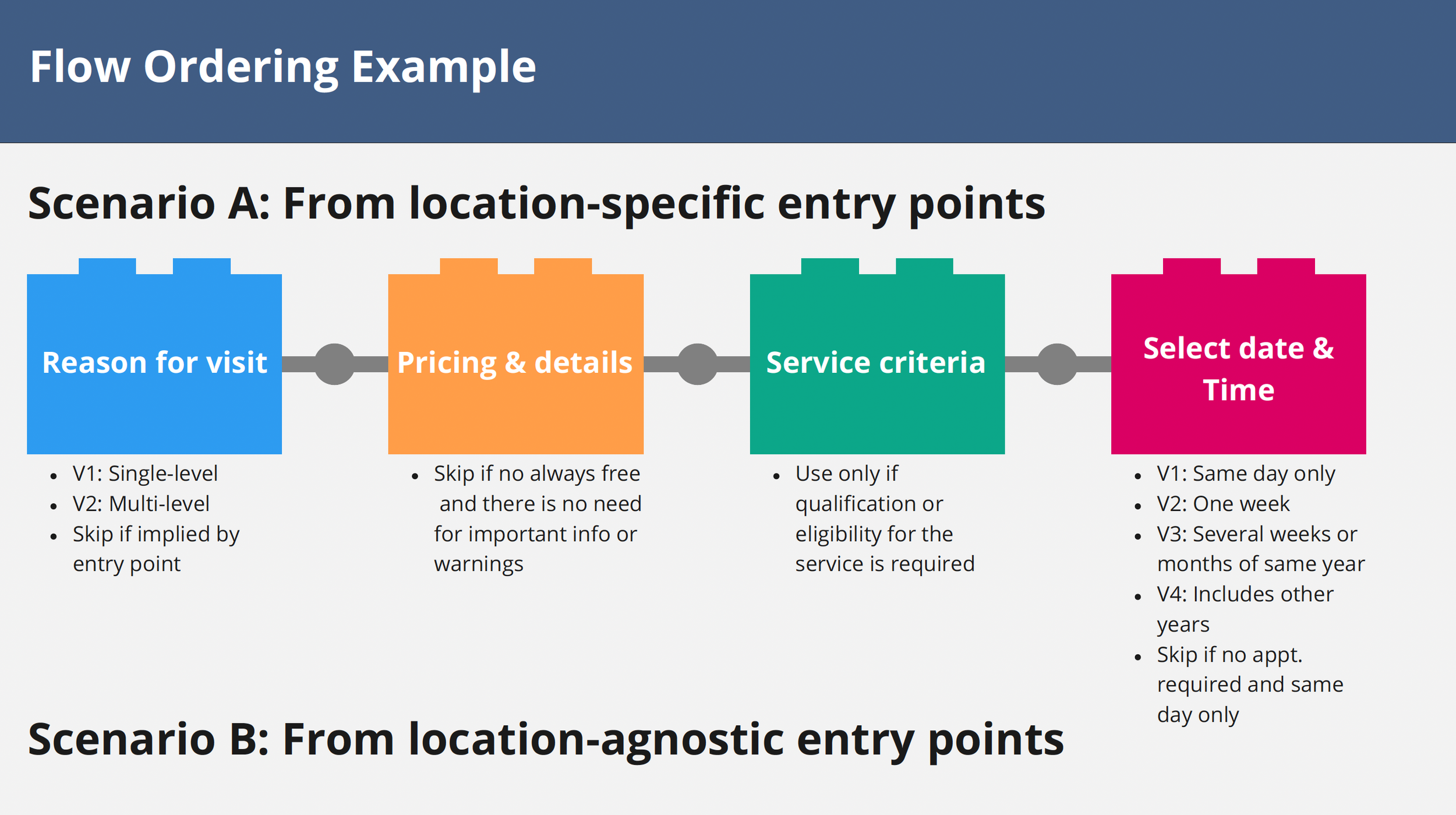
Articulating and establishing needs for module variants as required by use case
Prioritizing modules
Modular Assessment and Design
Once we had a common understanding of the current state of scheduling, tools for visualizing this together, and high-level plan on how to proceed, the important and delicate work of designing modules began. As you might imagine, other product and design teams were not often keen to have an outside team redesign their work, some of which was only recently completed. Major steps included:
Conducting additional story mapping
Establishing collaborative sessions with POCs for their relevant modules
Leading and module research and design strategy while consulting POCs
Leading resolution of disagreements or uncertainty related to evaluation and design
Securing support from branding to resolve questions
Establishing research plans and conducting testing as needed
Wireframing
Visual design
Prototyping
Key Problems & Goals
Problem #1:
16 distinct scheduling flows were identified across the organization. Continuing to maintain and develop new flows was inefficient and created inconsistency for users.
Problem #2:
It was unclear how to proceed with consolidating and redesigning scheduling flows or how many modules were needed.
Problem #3:
The level of effort required was unclear and the organization was unsure of how quickly they wanted to address this effort.
Goal #1:
Inventory all scheduling flows and determine POCs.
Goal #2
Collaborate with partners to determine module variant needs.
Goal #3:
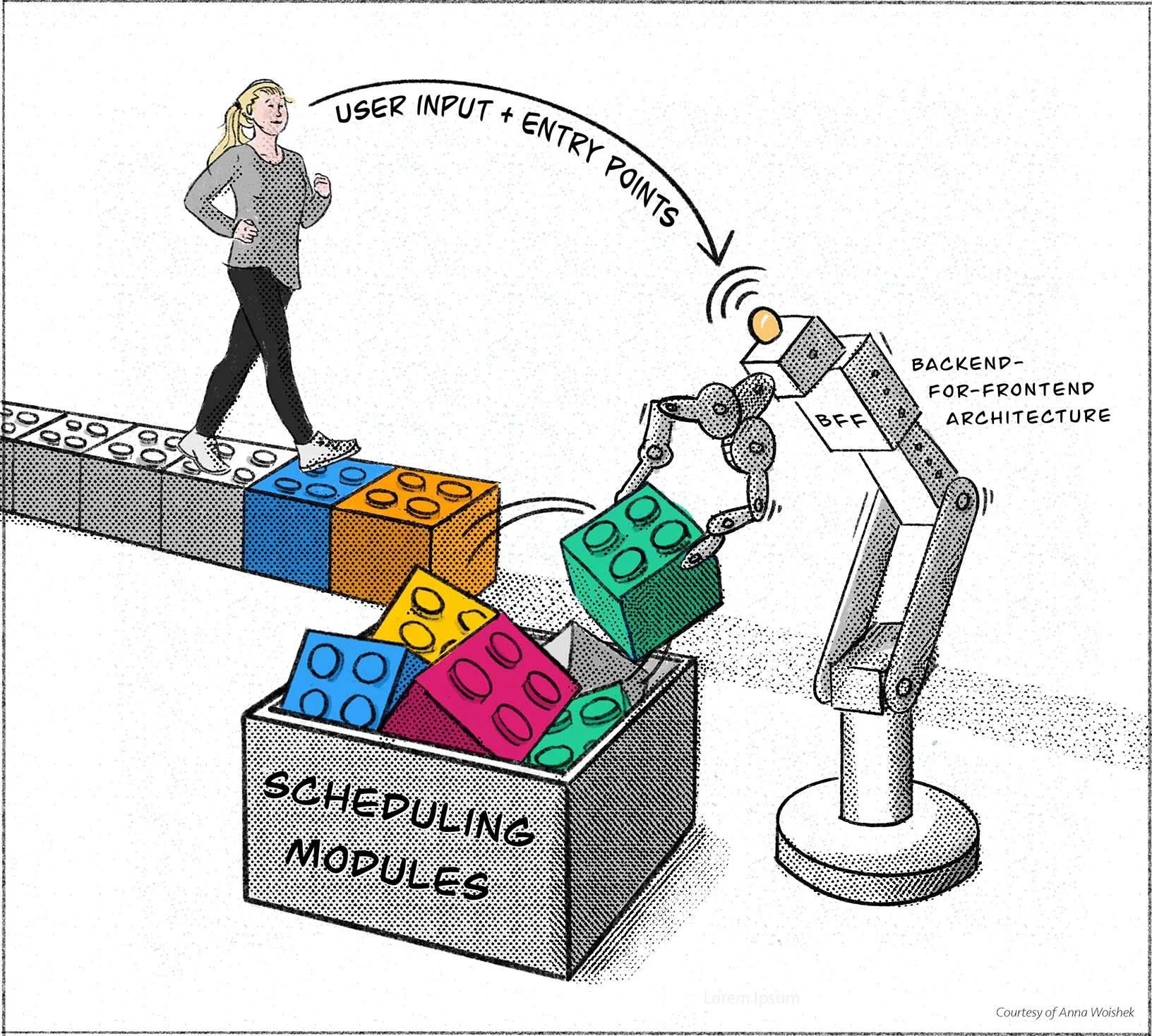
Create an assembly line-like strategy for staffing teams to research, design, and validate these modules in way that provided the organization with the ability to adjust scale and speed, as needed.
Goal #4:
Gently and objectively arbitrate disagreements between our team and POCs regarding module design.
Methodologies Used
Competitive analysis
Heuristic analysis
Story mapping
Stakeholder interviews
Usability testing
Wireframes
Visual design
Prototyping
Images