Leading Complex Quarterly Planning for a Large, Multi-disciplinary Team
Overview
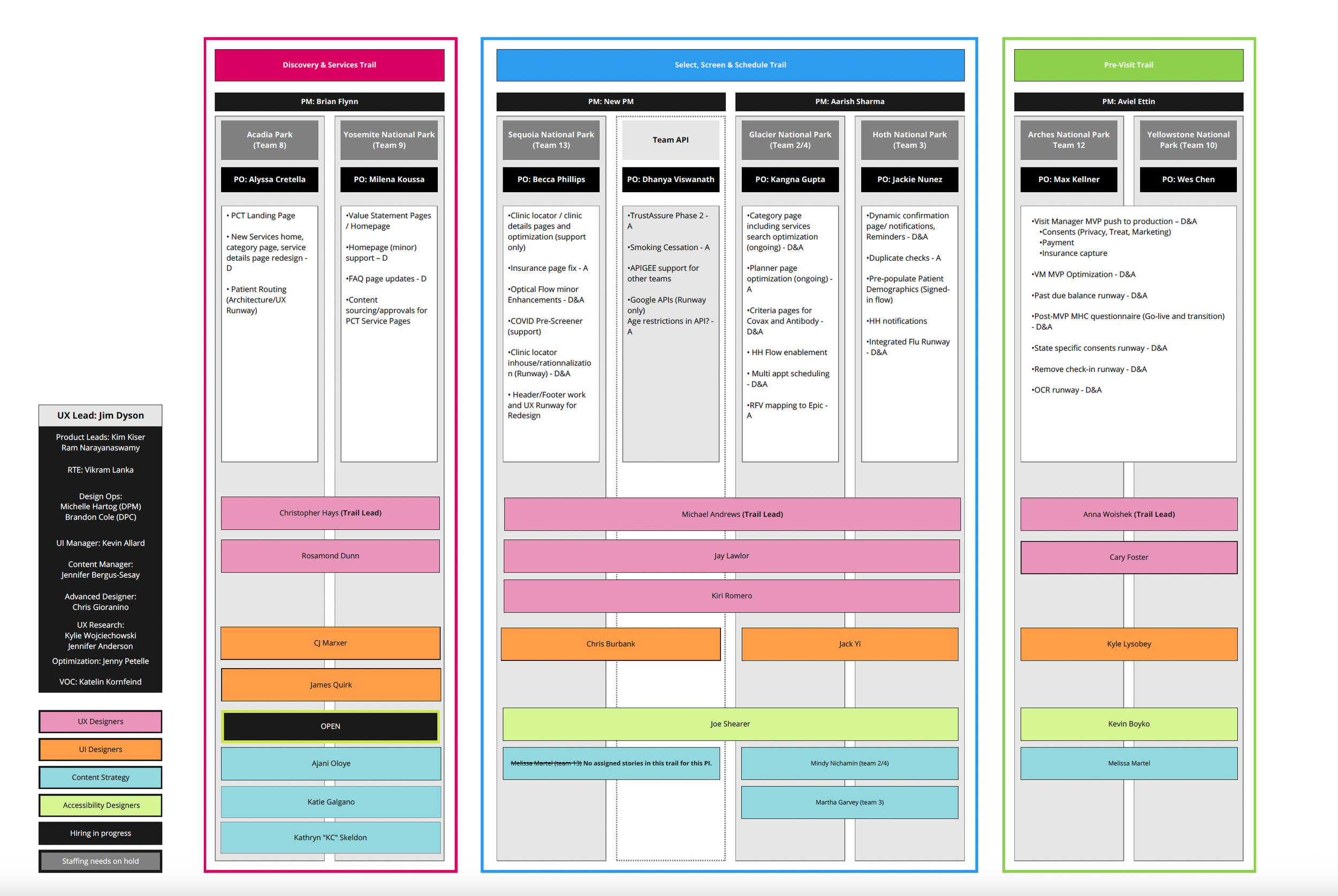
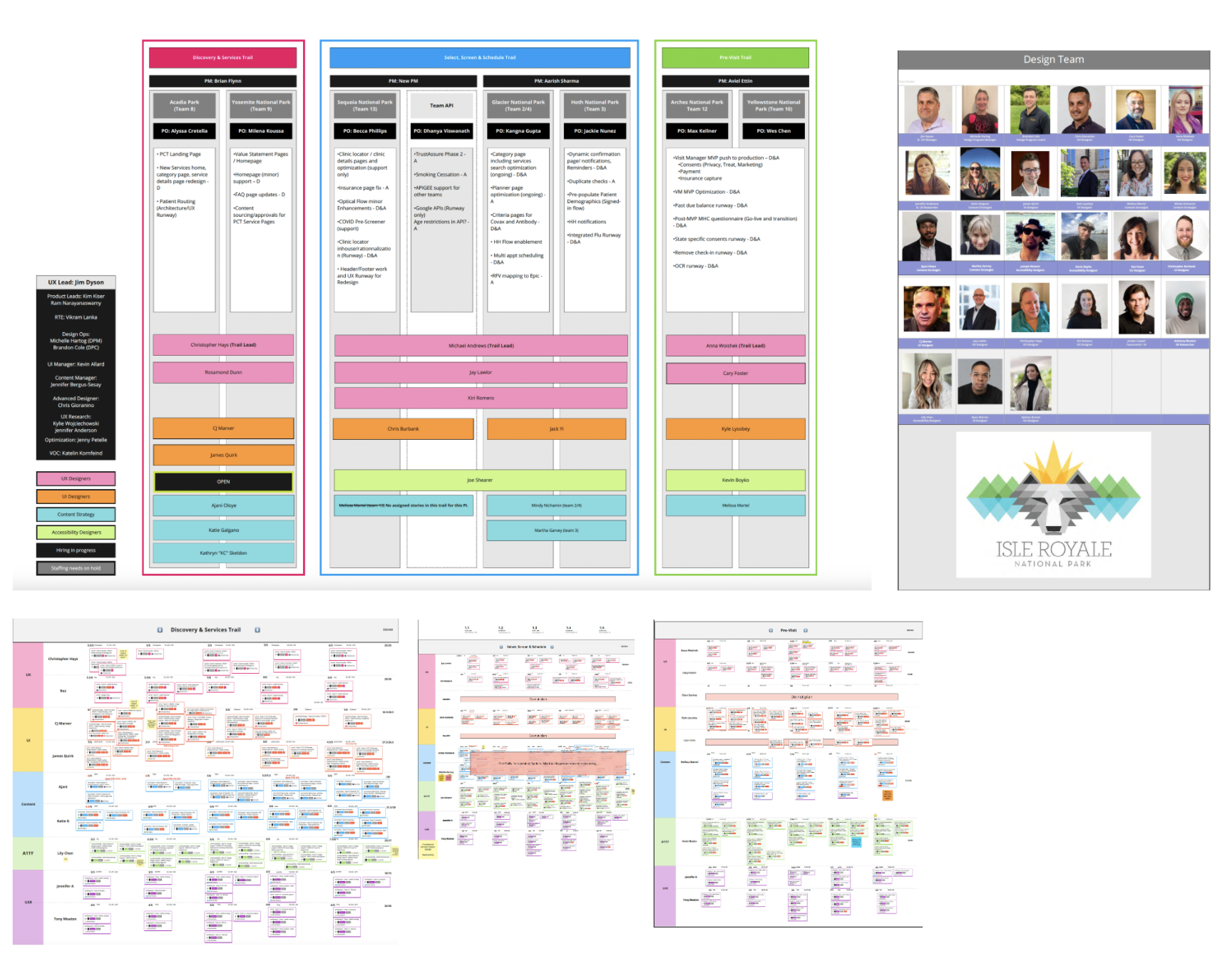
During my tenure at CVS, I led both small and large teams, and navigated research, planning, and execution within several development frameworks: waterfall, Scrum, KANBAN, and Scaled Agile Framework (SAFe). I had a great deal of responsibility - leading planning for my team (up to 27 employees), proactively shaping product roadmaps, and methodically coordinating and documenting the necessary work and resources. For several years, this was done on a quarterly basis.
Key Problems & Goals
Problem #1:
Product roadmaps were often very fluid and included significant last-minute changes.
Problem #2:
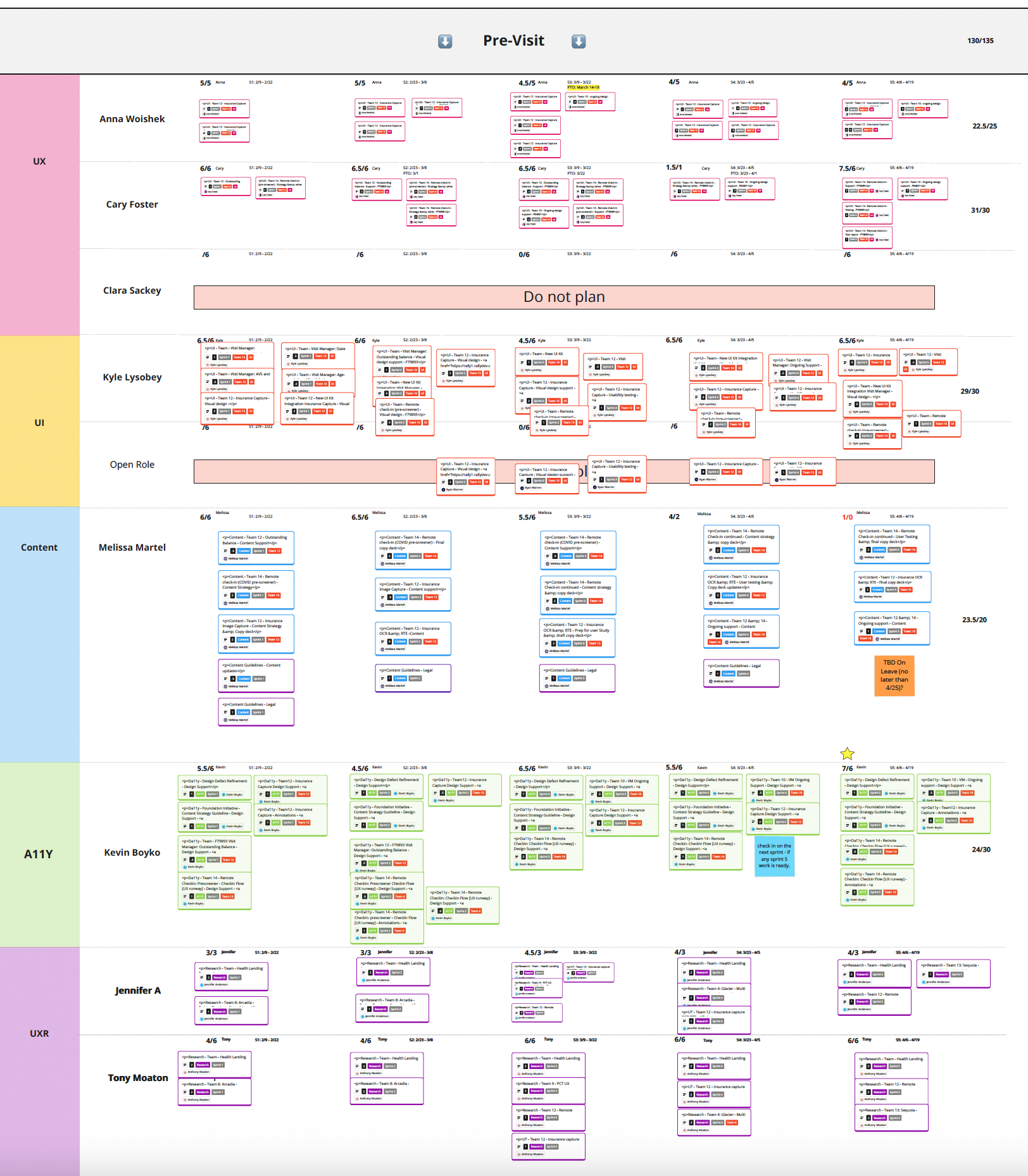
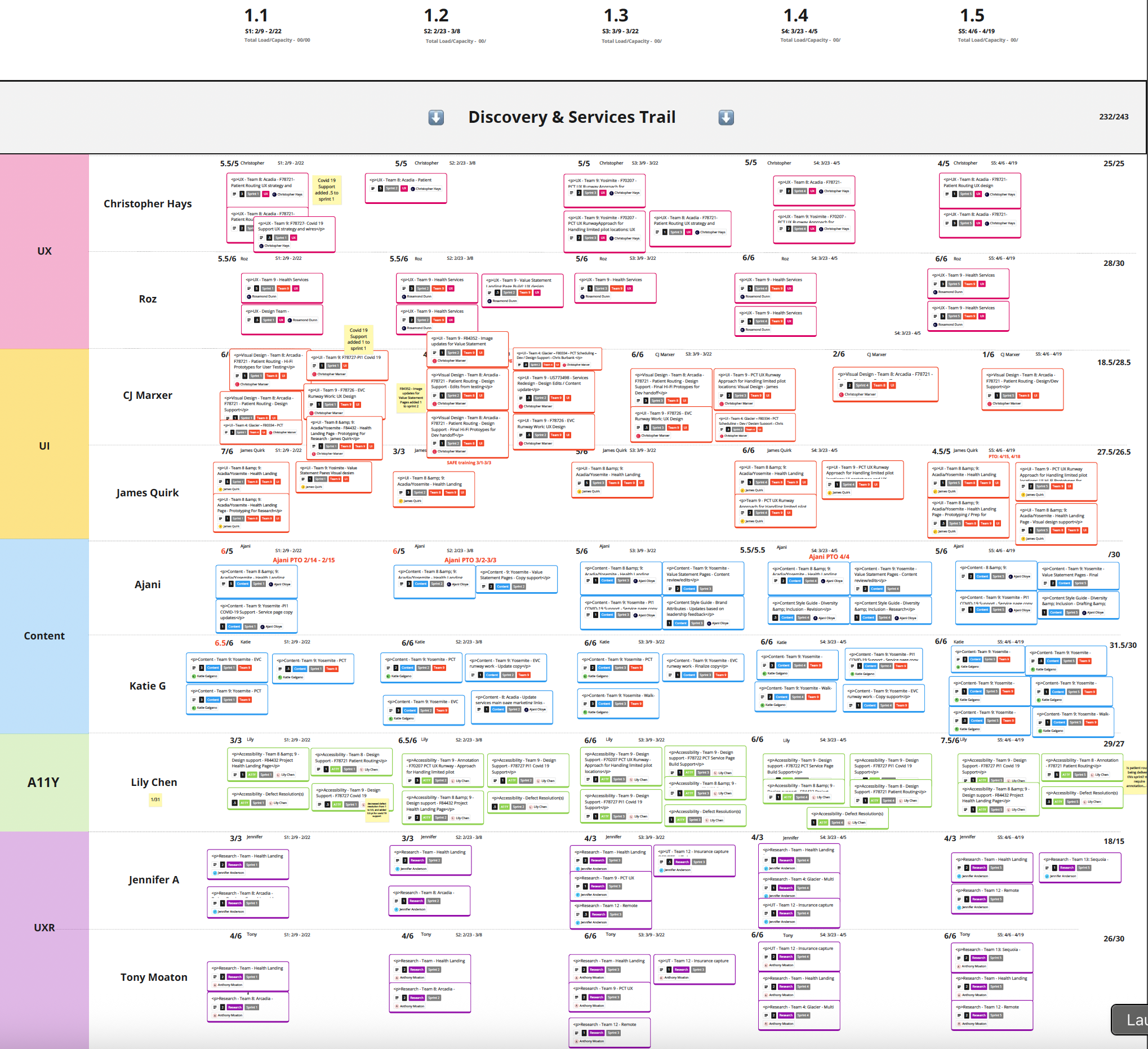
Leading a large multi-disciplinary team (up to 27 members) that included UX designers, visual designers, accessibility designers, researchers, and writers - some of whom were shared resources across several projects - required a great deal of proactive planning, and graceful pivoting as plans changed (and they often did).
Problem #3:
There was no shortage of urgent work, and without action, that could impact longer-term visioning and planning.
Problem #4:
Without my active advocacy, known UX and usability issues would go unaddressed. In addition, foundational research and strategy work would sometimes not get planned for without my attention.
Problem #5:
The product team was also quite large. On occasion, product managers would unknowingly advocate for projects that were counterproductive, were conflicting with existing plans they were unaware of. In other cases, they were unfamiliar with our working process and resource needs.
Goal #1:
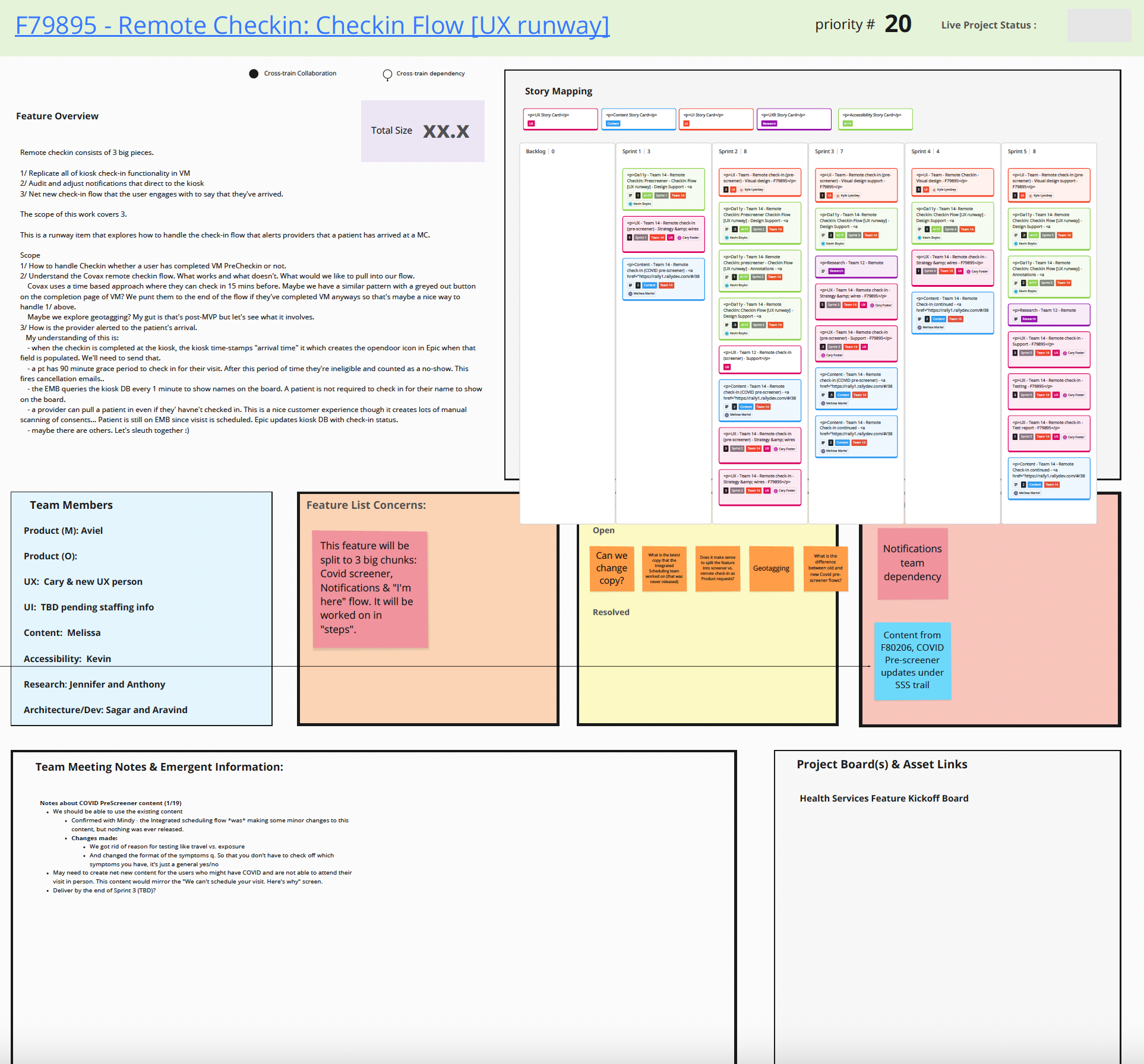
Lead and establish an effective story mapping protocol to facilitate the necessary planning for each member on each project, and use that to synchronize with product and IT partners.
Goal #2:
Identify, communicate, and reconcile resource, timing, and scope concerns when discrepancies were identified or project changes occurred.
Goal #3:
Monitor and regularly report on progress with leadership and across teams.
Goal #4:
Ensure it is clear to everyone who is working on what, how long they expect it to take, and which projects have priority when juggling multiple projects.
Goal #5:
Secure necessary resource bandwidth to support prioritized UX and usability issues, as well as plan foundational strategy and research efforts.
Goal #6:
Identify and address product manager plans that were conflicting with plans they were unaware of, as well as those that did not account for our work processes and resource constraints.
Methodologies Used
Story mapping
PI planning (via scaled agile framework (SAFe)
Images